Most viewed - NVD NVE Macular Edema August 14, 2008. This pleasant 47-year-old woman is having decreasing vision since I last saw her in February. She recently had a little bit of an adjustment on her medication. She is off of her Lisinopril and on Spironolactone. She has been checked recently by her medical doctor and her blood pressure has been fine and her sugars have been fine. Her health as far as she knows is good.
VISUAL ACUITY: OD 20/40, OS 20/40. IOP: OD 24, OS 23. There is 2+ nuclear sclerosis in both eyes.
EXTENDED OPHTHALMOSCOPY:
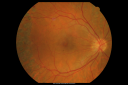
OD: Vertical C/D ratio is 0.1. There is extensive peripheral neovascularization. There is 2+ cystoid macular edema. There are patchy retinal hemorrhages and a moderately complete panretinal laser.
OS: Vertical C/D ratio is 0.1. There is 2+ cystoid macular edema. There is peripheral neovascularization and panretinal laser.
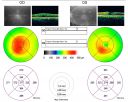
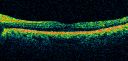
OCT SCAN: The OCT scan of the right eye shows increased macular edema in both eyes. The right eye is 377 microns and the left eye is 274 microns with a central foveal thickness, both of which are worse than last visit.
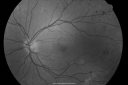
Photos confirm clinical findings.
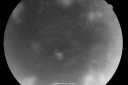
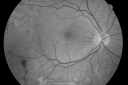
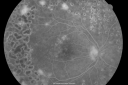
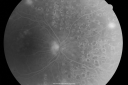
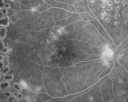
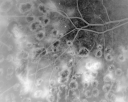
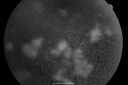
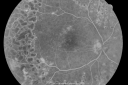
FLUORESCEIN ANGIOGRAM: FA shows extensive active neovascularization in the mid periphery of each eye and leakage of fluorescein in the macula in the late frames of both eyes.
IMPRESSION:
1. CYSTOID MACULAR EDEMA – BOTH EYES
2. PROLIFERATIVE DIABETIC RETINOPATHY – BOTH EYES
3. REACTIVATION OF PERIPHERAL NEOVASCULARIZATION DESPITE HEAVY PANRETINAL LASER
DISCUSSION: I explained to the patient that I am concerned about the macular edema and the active neovascularization in her eyes. It is now known that the vascular endothelial growth factor, which is the cause of the neovascularization, also causes increased macular lesions and I suspect her macular edema is more due to increased VEGF levels in her eyes than microaneurysms. The angiogram showed almost no focal areas of leakage in the macula that would be amenable to laser. I suggested we try supplementing panretinal laser in hopes of decreasing the VEGF load in the eyes and decreasing the macular edema. I added panretinal laser to the right eye today. She will return for an evaluation in a few weeks for probable treatment in the left eye. I will also send a note to her medical doctor to see if there is anything that could be done for her systemically.
If her macular edema does not subside reasonably quickly, intravitreal Avastin would probably do the trick. Intravitreal Kenalog is also helpful but she said she has a concern about her being a glaucoma suspect and also since she is phakic, her cataracts would probably worsen with the steroids.
|

Proliferative Diabetic Retinopathy both eyes Type I Diabetic for 25 years865 views47-year-old woman with diabetes for 25 years and decreased vision for 3 months. OD 20/40, OS 20/40
|
|

Proliferative Diabetic Retinopathy both eyes Type I Diabetic for 25 years819 views47-year-old woman with diabetes for 25 years and decreased vision for 3 months. OD 20/40, OS 20/40
|
|

Proliferative Diabetic Retinopathy both eyes Type I Diabetic for 25 years676 views47-year-old woman with diabetes for 25 years and decreased vision for 3 months. OD 20/40, OS 20/40
|
|

Proliferative Diabetic Retinopathy both eyes Type I Diabetic for 25 years664 views47-year-old woman with diabetes for 25 years and decreased vision for 3 months. OD 20/40, OS 20/40
|
|

Proliferative Diabetic Retinopathy both eyes Type I Diabetic for 25 years661 views47-year-old woman with diabetes for 25 years and decreased vision for 3 months. OD 20/40, OS 20/40
|
|

605 views
|
|
555 views
|
|
544 views
|
|
Proliferative Diabetic Retinopathy both eyes Type I Diabetic for 25 years527 views47-year-old woman with diabetes for 25 years and decreased vision for 3 months. OD 20/40, OS 20/40
|
|
Proliferative Diabetic Retinopathy both eyes Type I Diabetic for 25 years492 views47-year-old woman with diabetes for 25 years and decreased vision for 3 months. OD 20/40, OS 20/40
|
|

Proliferative Diabetic Retinopathy both eyes Type I Diabetic for 25 years490 views47-year-old woman with diabetes for 25 years and decreased vision for 3 months. OD 20/40, OS 20/40
|
|
Proliferative Diabetic Retinopathy both eyes Type I Diabetic for 25 years489 views47-year-old woman with diabetes for 25 years and decreased vision for 3 months. OD 20/40, OS 20/40
|
|
Proliferative Diabetic Retinopathy both eyes Type I Diabetic for 25 years477 views47-year-old woman with diabetes for 25 years and decreased vision for 3 months. OD 20/40, OS 20/40
|
|
Proliferative Diabetic Retinopathy both eyes Type I Diabetic for 25 years472 views47-year-old woman with diabetes for 25 years and decreased vision for 3 months. OD 20/40, OS 20/40
|
|
Proliferative Diabetic Retinopathy both eyes Type I Diabetic for 25 years453 views47-year-old woman with diabetes for 25 years and decreased vision for 3 months. OD 20/40, OS 20/40
|
|
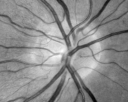
Proliferative Diabetic Retinopathy both eyes Type I Diabetic for 25 years449 views47-year-old woman with diabetes for 25 years and decreased vision for 3 months. OD 20/40, OS 20/40
|
|

Proliferative Diabetic Retinopathy both eyes Type I Diabetic for 25 years438 views47-year-old woman with diabetes for 25 years and decreased vision for 3 months. OD 20/40, OS 20/40
|
|
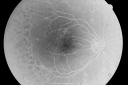
Proliferative Diabetic Retinopathy both eyes Type I Diabetic for 25 years436 views47-year-old woman with diabetes for 25 years and decreased vision for 3 months. OD 20/40, OS 20/40
|
|
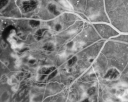
Proliferative Diabetic Retinopathy both eyes Type I Diabetic for 25 years431 views47-year-old woman with diabetes for 25 years and decreased vision for 3 months. OD 20/40, OS 20/40
|
|
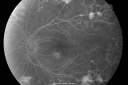
Proliferative Diabetic Retinopathy both eyes Type I Diabetic for 25 years427 views47-year-old woman with diabetes for 25 years and decreased vision for 3 months. OD 20/40, OS 20/40
|
|
Proliferative Diabetic Retinopathy both eyes Type I Diabetic for 25 years427 views47-year-old woman with diabetes for 25 years and decreased vision for 3 months. OD 20/40, OS 20/40
|
|
Proliferative Diabetic Retinopathy both eyes Type I Diabetic for 25 years427 views47-year-old woman with diabetes for 25 years and decreased vision for 3 months. OD 20/40, OS 20/40
|
|
Proliferative Diabetic Retinopathy both eyes Type I Diabetic for 25 years422 views47-year-old woman with diabetes for 25 years and decreased vision for 3 months. OD 20/40, OS 20/40
|
|
Proliferative Diabetic Retinopathy both eyes Type I Diabetic for 25 years419 views47-year-old woman with diabetes for 25 years and decreased vision for 3 months. OD 20/40, OS 20/40
|
|

Proliferative Diabetic Retinopathy both eyes Type I Diabetic for 25 years419 views47-year-old woman with diabetes for 25 years and decreased vision for 3 months. OD 20/40, OS 20/40
|
|
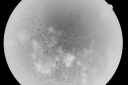
Proliferative Diabetic Retinopathy both eyes Type I Diabetic for 25 years418 views47-year-old woman with diabetes for 25 years and decreased vision for 3 months. OD 20/40, OS 20/40
|
|
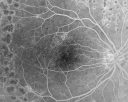
Proliferative Diabetic Retinopathy both eyes Type I Diabetic for 25 years416 views47-year-old woman with diabetes for 25 years and decreased vision for 3 months. OD 20/40, OS 20/40
|
|

Proliferative Diabetic Retinopathy both eyes Type I Diabetic for 25 years410 views47-year-old woman with diabetes for 25 years and decreased vision for 3 months. OD 20/40, OS 20/40
|
|
|
|
August 14, 2008. This pleasant 47-year-old woman is having decreasing vision since I last saw her in February. She recently had a little bit of an adjustment on her medication. She is off of her Lisinopril and on Spironolactone. She has been checked recently by her medical doctor and her blood pressure has been fine and her sugars have been fine. Her health as far as she knows is good.
VISUAL ACUITY: OD 20/40, OS 20/40. IOP: OD 24, OS 23. There is 2+ nuclear sclerosis in both eyes.
EXTENDED OPHTHALMOSCOPY:
OD: Vertical C/D ratio is 0.1. There is extensive peripheral neovascularization. There is 2+ cystoid macular edema. There are patchy retinal hemorrhages and a moderately complete panretinal laser.
OS: Vertical C/D ratio is 0.1. There is 2+ cystoid macular edema. There is peripheral neovascularization and panretinal laser.
OCT SCAN: The OCT scan of the right eye shows increased macular edema in both eyes. The right eye is 377 microns and the left eye is 274 microns with a central foveal thickness, both of which are worse than last visit.
Photos confirm clinical findings.
FLUORESCEIN ANGIOGRAM: FA shows extensive active neovascularization in the mid periphery of each eye and leakage of fluorescein in the macula in the late frames of both eyes.
IMPRESSION:
1. CYSTOID MACULAR EDEMA – BOTH EYES
2. PROLIFERATIVE DIABETIC RETINOPATHY – BOTH EYES
3. REACTIVATION OF PERIPHERAL NEOVASCULARIZATION DESPITE HEAVY PANRETINAL LASER
DISCUSSION: I explained to the patient that I am concerned about the macular edema and the active neovascularization in her eyes. It is now known that the vascular endothelial growth factor, which is the cause of the neovascularization, also causes increased macular lesions and I suspect her macular edema is more due to increased VEGF levels in her eyes than microaneurysms. The angiogram showed almost no focal areas of leakage in the macula that would be amenable to laser. I suggested we try supplementing panretinal laser in hopes of decreasing the VEGF load in the eyes and decreasing the macular edema. I added panretinal laser to the right eye today. She will return for an evaluation in a few weeks for probable treatment in the left eye. I will also send a note to her medical doctor to see if there is anything that could be done for her systemically.
If her macular edema does not subside reasonably quickly, intravitreal Avastin would probably do the trick. Intravitreal Kenalog is also helpful but she said she has a concern about her being a glaucoma suspect and also since she is phakic, her cataracts would probably worsen with the steroids.


