Macular Pucker - Asymptomatic 20/200 Vision (left eye)
|
|
79-year-old man was seen in the office on June 15, 2011. He recently was in for an eye exam. His last exam was about four years ago. He had not noticed a change in vision, but was diagnosed with a macular pucker in the left eye. Even now he doesn’t notice much difference between the eyes, although he doesn’t usually compare them. He has a prescription for new glasses.
VISUAL ACUITY: OD 20/80, Pinhole 20/50. OS 20/200. IOP: OD 17, OS 15.
SLIT EXAMINATION: There is 2+ nuclear sclerosis in both eyes.
EXTENDED OPHTHALMOSCOPY:
OD: Vertical C/D ratio is 0.2. There is trace epiretinal membrane. There are 2+ equatorial and 1+ macular drusen.
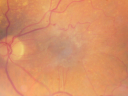
OS: Vertical C/D ratio is 0.2. There is 3+ epiretinal membrane. There is 1+ macular and 2+ equatorial drusen. There are also some hemorrhages at the edge of the pucker, predominately superiorly.
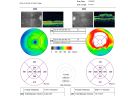
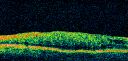
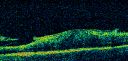
OCT SCAN: The OCT scan shows in the right eye an average central foveal thickness of 198 microns and the left eye has 590 microns. The cross section of the macula in the right eye does show partial vitreous separation with a normal foveal contour. The left eye shows a thick macular pucker and possible vitreomacular traction. The nerve fiber layer scan in the right eye was normal with an average thickness of 88 microns. The left eye was unreliable because of the vitreous around the optic nerve with a thickness of a 110 microns. Photos confirm clinical findings.
IMPRESSION:
1. MACULAR PUCKER – LEFT EYE
2. MACULAR DRUSEN – BOTH EYES
3. CATARACTS – BOTH EYES
DISCUSSION: I explained to the patient with a 20/200 macular pucker he is an excellent candidate for surgery, which has an 80 percent chance of improving the vision about half way to normal on the other hand he is relatively asymptomatic and approaching his eighth birthday and because of that I told him whether or not to do the surgery is completely up to him. I did warn him though as time passes the visual improvement tends to decline and so if he decides to do the surgery, he probably should do it within the next few months.
I made a two month follow-up appointment for him. In the meantime he does have cataracts in both eyes and generally my preference is to have the cataracts removed prior to the macular pucker surgery, so if he decides to have the macular pucker surgery I probably would recommend the cataract surgery first. In addition he does have a little bit of an issue with his visual acuity and his driving.
At the moment he is not legal to drive in the state of Florida, but possibly with a change in prescription he will be. If the vision in the left eye were a little better than 20/200 that would give him more wiggle room with the right eye. If the left eye is better than 20/200, the right eye only has to see 20/70 or better, but with a 20/200 or worse vision the right eye has to be 20/40 or better.
|
Asymptomatic 20/200 Macular Pucker 79 year old man - Left Eye631 views79-year-old man who had not noticed a change in vision, but was diagnosed with a macular pucker in the left eye. Even now he doesn’t notice much difference between the eyes, although he doesn’t usually compare them. He has a prescription for new glasses.
VISUAL ACUITY: OD 20/80, Pinhole 20/50. OS 20/200.
(0 votes)
|
|

Asymptomatic 20/200 Macular Pucker 79 year old man - Left Eye511 views79-year-old man who had not noticed a change in vision, but was diagnosed with a macular pucker in the left eye. Even now he doesn’t notice much difference between the eyes, although he doesn’t usually compare them. He has a prescription for new glasses.
VISUAL ACUITY: OD 20/80, Pinhole 20/50. OS 20/200.
(0 votes)
|
|
Asymptomatic 20/200 Macular Pucker 79 year old man - Left Eye595 views79-year-old man who had not noticed a change in vision, but was diagnosed with a macular pucker in the left eye. Even now he doesn’t notice much difference between the eyes, although he doesn’t usually compare them. He has a prescription for new glasses.
VISUAL ACUITY: OD 20/80, Pinhole 20/50. OS 20/200.
(0 votes)
|
|
Asymptomatic 20/200 Macular Pucker 79 year old man - Left Eye563 views79-year-old man who had not noticed a change in vision, but was diagnosed with a macular pucker in the left eye. Even now he doesn’t notice much difference between the eyes, although he doesn’t usually compare them. He has a prescription for new glasses.
VISUAL ACUITY: OD 20/80, Pinhole 20/50. OS 20/200.
(0 votes)
|
|
Asymptomatic 20/200 Macular Pucker 79 year old man - Left Eye607 views79-year-old man who had not noticed a change in vision, but was diagnosed with a macular pucker in the left eye. Even now he doesn’t notice much difference between the eyes, although he doesn’t usually compare them. He has a prescription for new glasses.
VISUAL ACUITY: OD 20/80, Pinhole 20/50. OS 20/200.
(0 votes)
|
|
|
|
|
|
|
79-year-old man was seen in the office on June 15, 2011. He recently was in for an eye exam. His last exam was about four years ago. He had not noticed a change in vision, but was diagnosed with a macular pucker in the left eye. Even now he doesn’t notice much difference between the eyes, although he doesn’t usually compare them. He has a prescription for new glasses.
VISUAL ACUITY: OD 20/80, Pinhole 20/50. OS 20/200. IOP: OD 17, OS 15.
SLIT EXAMINATION: There is 2+ nuclear sclerosis in both eyes.
EXTENDED OPHTHALMOSCOPY:
OD: Vertical C/D ratio is 0.2. There is trace epiretinal membrane. There are 2+ equatorial and 1+ macular drusen.
OS: Vertical C/D ratio is 0.2. There is 3+ epiretinal membrane. There is 1+ macular and 2+ equatorial drusen. There are also some hemorrhages at the edge of the pucker, predominately superiorly.
OCT SCAN: The OCT scan shows in the right eye an average central foveal thickness of 198 microns and the left eye has 590 microns. The cross section of the macula in the right eye does show partial vitreous separation with a normal foveal contour. The left eye shows a thick macular pucker and possible vitreomacular traction. The nerve fiber layer scan in the right eye was normal with an average thickness of 88 microns. The left eye was unreliable because of the vitreous around the optic nerve with a thickness of a 110 microns. Photos confirm clinical findings.
IMPRESSION:
1. MACULAR PUCKER – LEFT EYE
2. MACULAR DRUSEN – BOTH EYES
3. CATARACTS – BOTH EYES
DISCUSSION: I explained to the patient with a 20/200 macular pucker he is an excellent candidate for surgery, which has an 80 percent chance of improving the vision about half way to normal on the other hand he is relatively asymptomatic and approaching his eighth birthday and because of that I told him whether or not to do the surgery is completely up to him. I did warn him though as time passes the visual improvement tends to decline and so if he decides to do the surgery, he probably should do it within the next few months.
I made a two month follow-up appointment for him. In the meantime he does have cataracts in both eyes and generally my preference is to have the cataracts removed prior to the macular pucker surgery, so if he decides to have the macular pucker surgery I probably would recommend the cataract surgery first. In addition he does have a little bit of an issue with his visual acuity and his driving.
At the moment he is not legal to drive in the state of Florida, but possibly with a change in prescription he will be. If the vision in the left eye were a little better than 20/200 that would give him more wiggle room with the right eye. If the left eye is better than 20/200, the right eye only has to see 20/70 or better, but with a 20/200 or worse vision the right eye has to be 20/40 or better.


