63-year-old woman has been diabetic for twenty one years and a recent evaluation in the office you saw a problem. She came in because she sees floaters. She sees a few spots moving around in the right eye now and then. She does have a history of high blood pressure. She also takes a baby aspirin.
VISUAL ACUITY: OD 20/40, OS 20/40. IOP: OD 14, OS 19.
SLIT EXAMINATION: There is 2+ nuclear sclerosis in both eyes.
EXTENDED OPHTHALMOSCOPY:
OD: Vertical C/D ratio is 0.0. There is a disc and a half diameter of neovascularization on the superior pole of the optic nerve. There is also a 2 disc-diameter choroidal nevus at the equator at 4 o’clock. There is a vitreous hemorrhage at 6 o’clock, which is only a small preretinal vitreous hemorrhage. There are patchy retinal hemorrhages. There is no edema.
OS: Vertical C/D ratio is 0.0. There is a tuft of neovascularization in the inferotemporal periphery, which is elevated.
OCT SCAN: The OCT scan shows an average central foveal thickness in the right eye of 176 microns. The left eye has 207 microns. Photos confirm clinical findings.
FLUORESCEIN ANGIOGRAPHY: Fluorescein angiography shows leakage of the neovascularization on the nerve in the right eye and the inferotemporal periphery in the left eye. The nevus is hypofluorescence. There is no evidence of any significant macular edema.
IMPRESSION:
1. PROLIFERATIVE DIABETIC RETINOPATHY – BOTH EYES
2. VITREOUS HEMORRHAGE – RIGHT EYE
3. CHOROIDAL NEVUS – RIGHT EYE
4. CATARACTS
DISCUSSION: I explained to the patient she does have high risk proliferative diabetic retinopathy in the right eye and moderate risk proliferative diabetic retinopathy in the left eye. With pan retinal laser we can reduce the risk of severe vision loss over the next two years substantially and I treated the right eye with initial pan retinal laser.
|
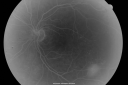
Proliferative Diabetic Retinopathy both Eyes Neovascularization of the Discvista 839 veces63-year-old woman has been diabetic for twenty one years who sees new floaters in the right eye. OD 20/40, OS 20/40.
(0 votos)
|
|

Proliferative Diabetic Retinopathy both Eyes Neovascularization of the Discvista 958 veces63-year-old woman has been diabetic for twenty one years who sees new floaters in the right eye. OD 20/40, OS 20/40.
(0 votos)
|
|

Proliferative Diabetic Retinopathy both Eyes Neovascularization of the Discvista 1600 veces63-year-old woman has been diabetic for twenty one years who sees new floaters in the right eye. OD 20/40, OS 20/40.
(1 votos)
|
|

Proliferative Diabetic Retinopathy both Eyes Neovascularization of the Discvista 790 veces63-year-old woman has been diabetic for twenty one years who sees new floaters in the right eye. OD 20/40, OS 20/40.
(0 votos)
|
|

Proliferative Diabetic Retinopathy both Eyes Neovascularization of the Discvista 757 veces63-year-old woman has been diabetic for twenty one years who sees new floaters in the right eye. OD 20/40, OS 20/40.
(0 votos)
|
|

Proliferative Diabetic Retinopathy both Eyes Neovascularization of the Discvista 772 veces63-year-old woman has been diabetic for twenty one years who sees new floaters in the right eye. OD 20/40, OS 20/40.
(0 votos)
|
|

Proliferative Diabetic Retinopathy both Eyes Neovascularization of the Discvista 1040 veces63-year-old woman has been diabetic for twenty one years who sees new floaters in the right eye. OD 20/40, OS 20/40.
(0 votos)
|
|

Proliferative Diabetic Retinopathy both Eyes Neovascularization of the Discvista 788 veces63-year-old woman has been diabetic for twenty one years who sees new floaters in the right eye. OD 20/40, OS 20/40.
(0 votos)
|
|

Proliferative Diabetic Retinopathy both Eyes Neovascularization of the Discvista 794 veces63-year-old woman has been diabetic for twenty one years who sees new floaters in the right eye. OD 20/40, OS 20/40.
(0 votos)
|
|

Proliferative Diabetic Retinopathy both Eyes Neovascularization of the Discvista 713 veces63-year-old woman has been diabetic for twenty one years who sees new floaters in the right eye. OD 20/40, OS 20/40.
(0 votos)
|
|
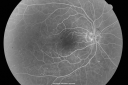
Proliferative Diabetic Retinopathy both Eyes Neovascularization of the Discvista 744 veces63-year-old woman has been diabetic for twenty one years who sees new floaters in the right eye. OD 20/40, OS 20/40.
(0 votos)
|
|

Proliferative Diabetic Retinopathy both Eyes Neovascularization of the Discvista 721 veces63-year-old woman has been diabetic for twenty one years who sees new floaters in the right eye. OD 20/40, OS 20/40.
(0 votos)
|
|
| 12 archivos en 1 página(s) |
|
63-year-old woman has been diabetic for twenty one years and a recent evaluation in the office you saw a problem. She came in because she sees floaters. She sees a few spots moving around in the right eye now and then. She does have a history of high blood pressure. She also takes a baby aspirin.
VISUAL ACUITY: OD 20/40, OS 20/40. IOP: OD 14, OS 19.
SLIT EXAMINATION: There is 2+ nuclear sclerosis in both eyes.
EXTENDED OPHTHALMOSCOPY:
OD: Vertical C/D ratio is 0.0. There is a disc and a half diameter of neovascularization on the superior pole of the optic nerve. There is also a 2 disc-diameter choroidal nevus at the equator at 4 o’clock. There is a vitreous hemorrhage at 6 o’clock, which is only a small preretinal vitreous hemorrhage. There are patchy retinal hemorrhages. There is no edema.
OS: Vertical C/D ratio is 0.0. There is a tuft of neovascularization in the inferotemporal periphery, which is elevated.
OCT SCAN: The OCT scan shows an average central foveal thickness in the right eye of 176 microns. The left eye has 207 microns. Photos confirm clinical findings.
FLUORESCEIN ANGIOGRAPHY: Fluorescein angiography shows leakage of the neovascularization on the nerve in the right eye and the inferotemporal periphery in the left eye. The nevus is hypofluorescence. There is no evidence of any significant macular edema.
IMPRESSION:
1. PROLIFERATIVE DIABETIC RETINOPATHY – BOTH EYES
2. VITREOUS HEMORRHAGE – RIGHT EYE
3. CHOROIDAL NEVUS – RIGHT EYE
4. CATARACTS
DISCUSSION: I explained to the patient she does have high risk proliferative diabetic retinopathy in the right eye and moderate risk proliferative diabetic retinopathy in the left eye. With pan retinal laser we can reduce the risk of severe vision loss over the next two years substantially and I treated the right eye with initial pan retinal laser.


